
On this page· 10 sections
- 01Where is the AC Joint and Why is it Important?
- 02How Does It Occur?
- 03Rockwood Classification (Type 1-6)
- 04What Are the Symptoms?
- 05How is Diagnosis Made?
- 06Treatment Approach
- 07When is Surgical Treatment Necessary?
- 08Surgical Techniques and Scientific Findings
- 09Possible Complications
- 10Clinical Perspective
Acromioclavicular joint dislocation is a trauma that often occurs after falling onto the shoulder, resulting from damage to the ligaments between the collarbone and the shoulder blade. It is common in athletes and in motorcycle-bicycle accidents. Treatment is determined by the degree of injury, the patient’s lifestyle, and symptoms.
Where is the AC Joint and Why is it Important?
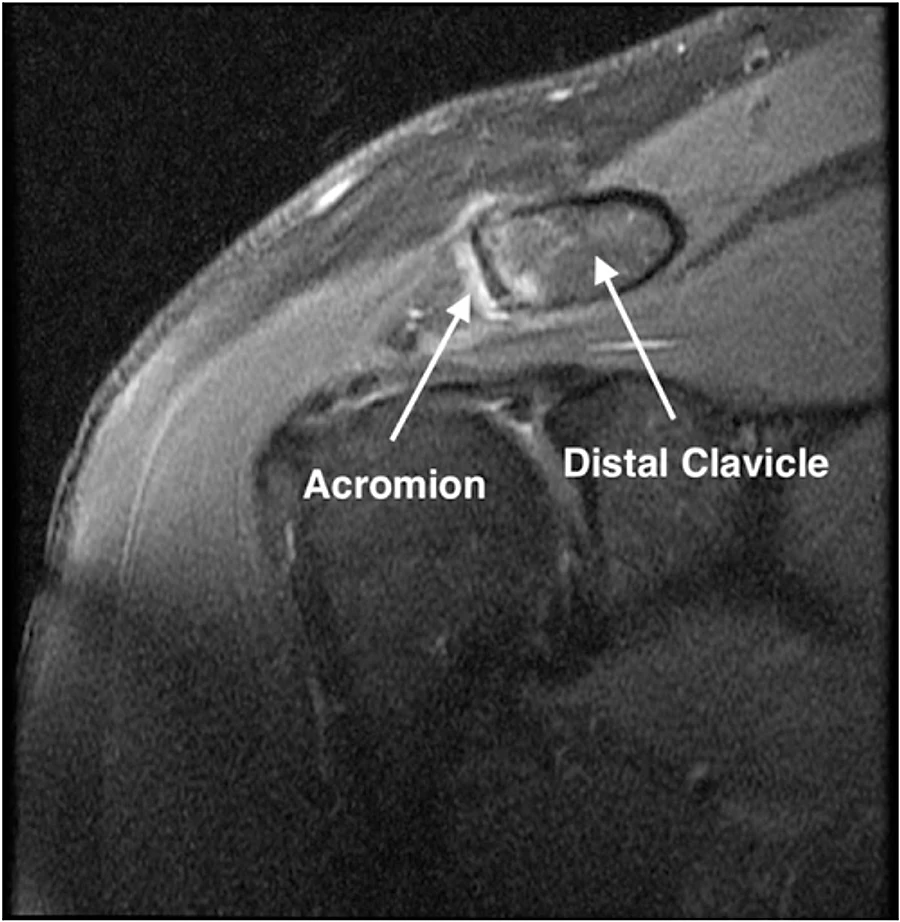
The AC joint is the point where the collarbone (clavicle) meets the acromion, a projection of the shoulder blade. It plays a critical role in shoulder load transfer and overhead movements.
Two main stabilizers are found in this region:
- Acromioclavicular capsule, which controls anterior-posterior movement of the clavicle,
- Coracoclavicular ligaments (trapezoid and conoid), which provide superior-inferior stability.
When these structures are damaged, the clavicle displaces upwards or posteriorly, resulting in pain, deformity, and loss of function.
How Does It Occur?
Most common causes:
- Direct fall onto the shoulder
- Contact sports like American football, ice hockey
- Bicycle and motorcycle accidents
As the severity of the trauma increases, ligament damage also increases, leading to different degrees of dislocation.
Rockwood Classification (Type 1-6)
The most critical factor determining treatment is the degree of injury:
- Type 1: Partial injury to the capsule
- Type 2: Complete tear of the capsule
- Type 3: Coracoclavicular ligament injury
- Type 4: Posterior displacement of the clavicle and trapezius muscle damage
- Type 5: 100-300% increase in the coracoclavicular distance compared to the contralateral shoulder
- Type 6: Distal clavicle positioned inferior to the coracoid process
The general approach can be summarized as follows: Type 1-2 injuries are treated conservatively, Type 4-6 require surgery; for Type 3, a patient-specific decision is made.
What Are the Symptoms?
Patients typically present with the following complaints:
- Significant pain on top of the shoulder
- Restricted movement and tenderness to touch
- Deformity described as if the “collarbone has popped out”
- Pain increasing when bringing the arm across the body
Special tests such as O’Brien’s and Paxino’s may be positive on examination.
How is Diagnosis Made?
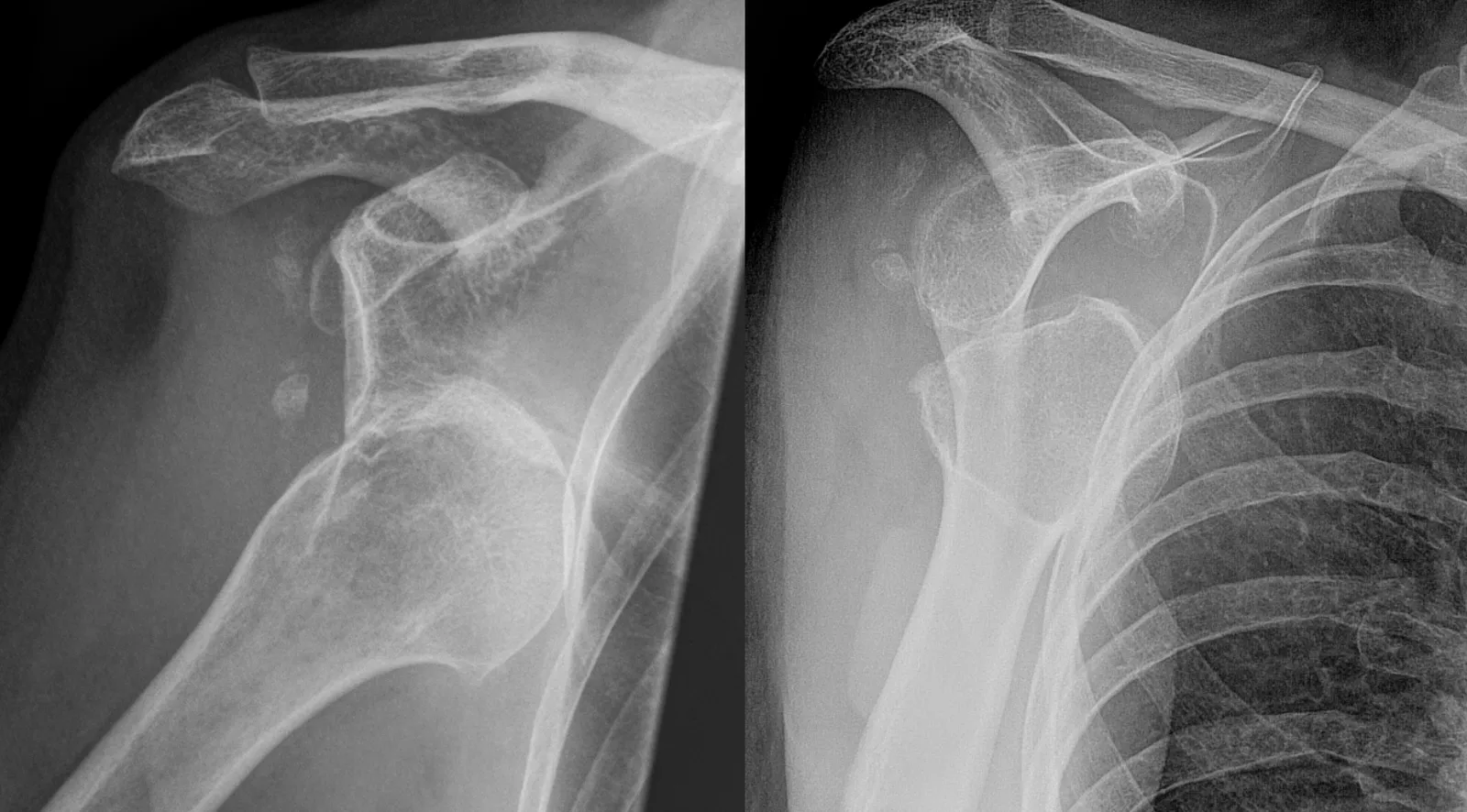
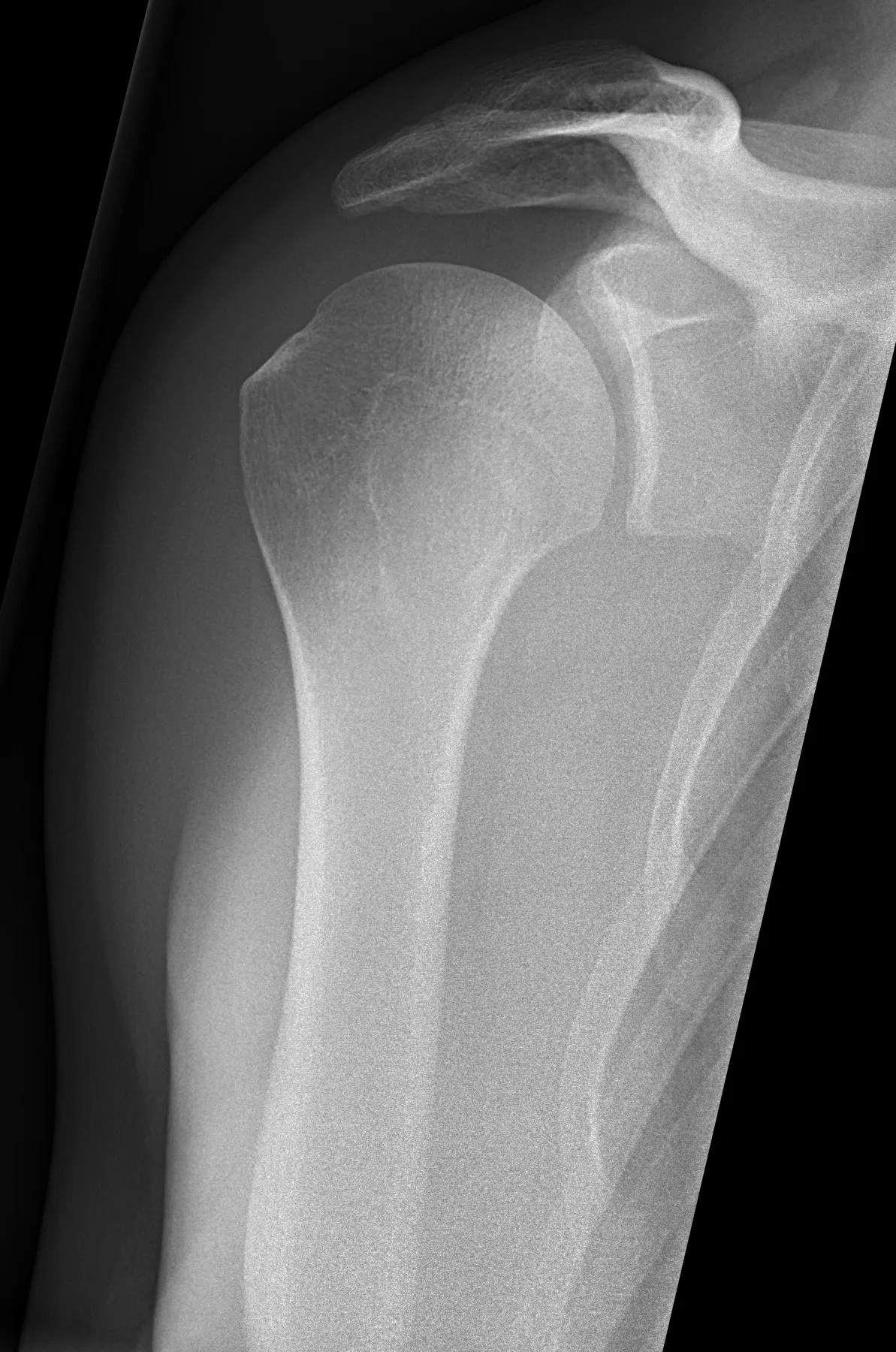
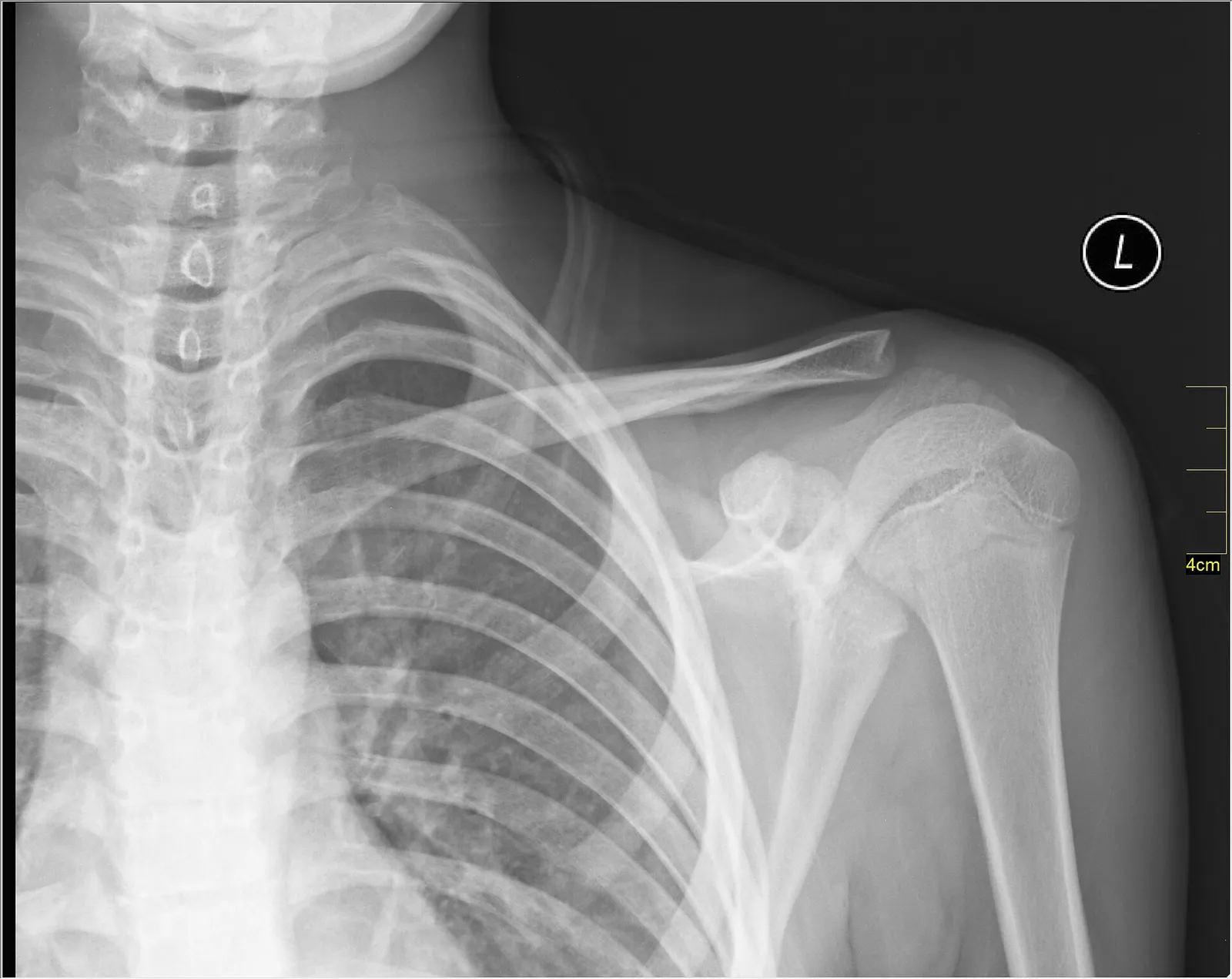
Diagnosis is established through clinical examination and imaging. Evaluation involves an AP shoulder radiograph, an axillary view, and a Zanca view taken with 15° cephalic tilt; Basamania or Alexander views may be added if necessary. The aim is to determine the direction of clavicular displacement and the coracoclavicular distance.
Treatment Approach
At the core of the decision-making process are three questions: which patient, when, and which method?
Conservative Treatment (Generally Type 1-2)
Arm sling, pain relievers, controlled early movement, and rehabilitation are applied. Most patients return to their daily lives within a few weeks.
Type 3 Injuries: A Gray Area
In Type 3, the approach is individualized. If pain is minimal and function is good, conservative management is preferred; if pain persists and deformity is significant, surgery is considered. Some protocols recommend re-evaluation after 3 weeks of conservative management.
When is Surgical Treatment Necessary?
Surgery is generally considered in the following situations:
- Type 4-5-6 injuries
- Symptomatic Type 3 injuries
- Athletes or individuals performing heavy physical labor
- Patients with significant deformity and loss of function
The goal is to restore coracoclavicular stability.
Surgical Techniques and Scientific Findings
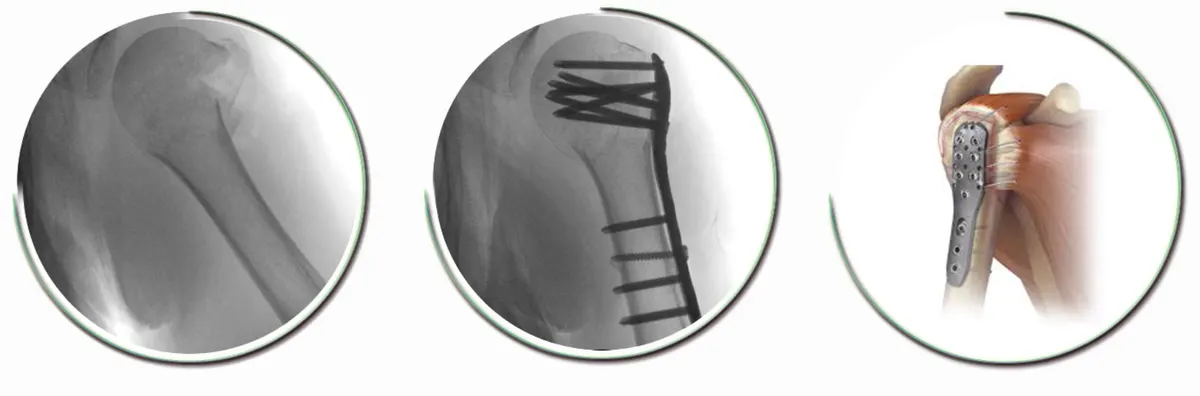
The literature has compared screw fixation, K-wires, suture button (suspension) systems, hook plates, and arthroscopically assisted reconstructions. Studies generally show that:
- Functional scores are generally higher with suture button systems; however, the complication rate may also increase in this group.
- Performing reduction within the first 5 days significantly reduces the risk of failure.
- Long-term outcomes are significantly better in patients who achieve high-quality reduction.
Therefore, there is no single best method; personalized surgical planning based on the patient’s profile is essential.
Possible Complications
As with all surgeries, AC joint operations also carry risks: recurrence, infection, implant irritation or migration, clavicle-coracoid fracture, osteolysis, and subacromial impingement. Therefore, correct patient selection and appropriate technique are of vital importance.
Clinical Perspective
AC joint dislocations are not merely bone displacements; the main issue is the loss of ligament stability. The goal of treatment is to achieve reconstruction as close to anatomy as possible and meet the patient’s functional expectations. At this point, evaluation and treatment planning by an orthopedic surgeon experienced in shoulder surgery directly affect long-term outcomes.
Acromioclavicular joint injuries yield gratifying results when managed correctly; however, delayed diagnosis, incorrect classification, or inappropriate treatment can lead to chronic shoulder problems. An evaluation by an experienced specialist in shoulder surgery is important for personalized planning of diagnosis, staging, and treatment options.