
On this page· 2 sections
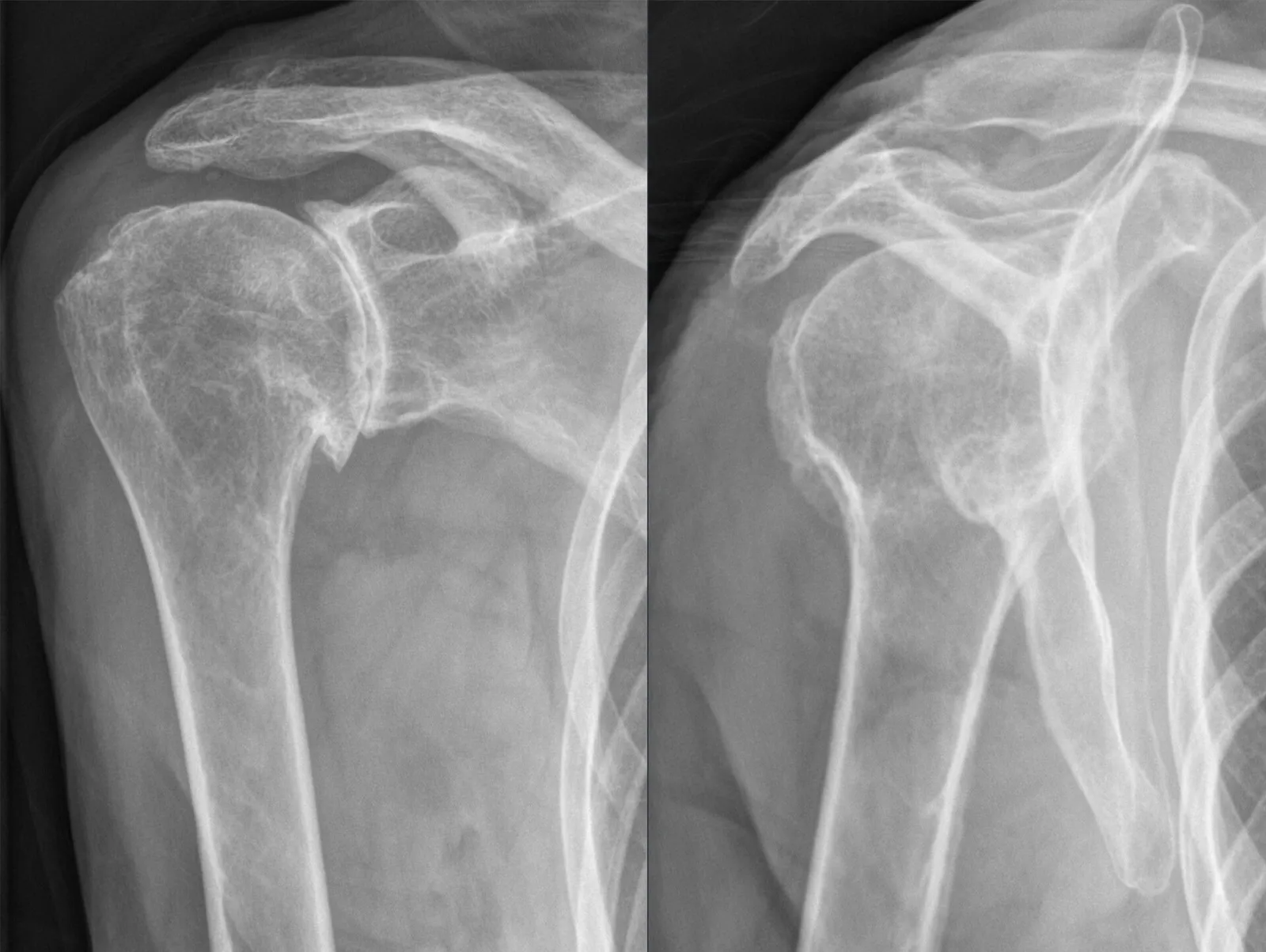
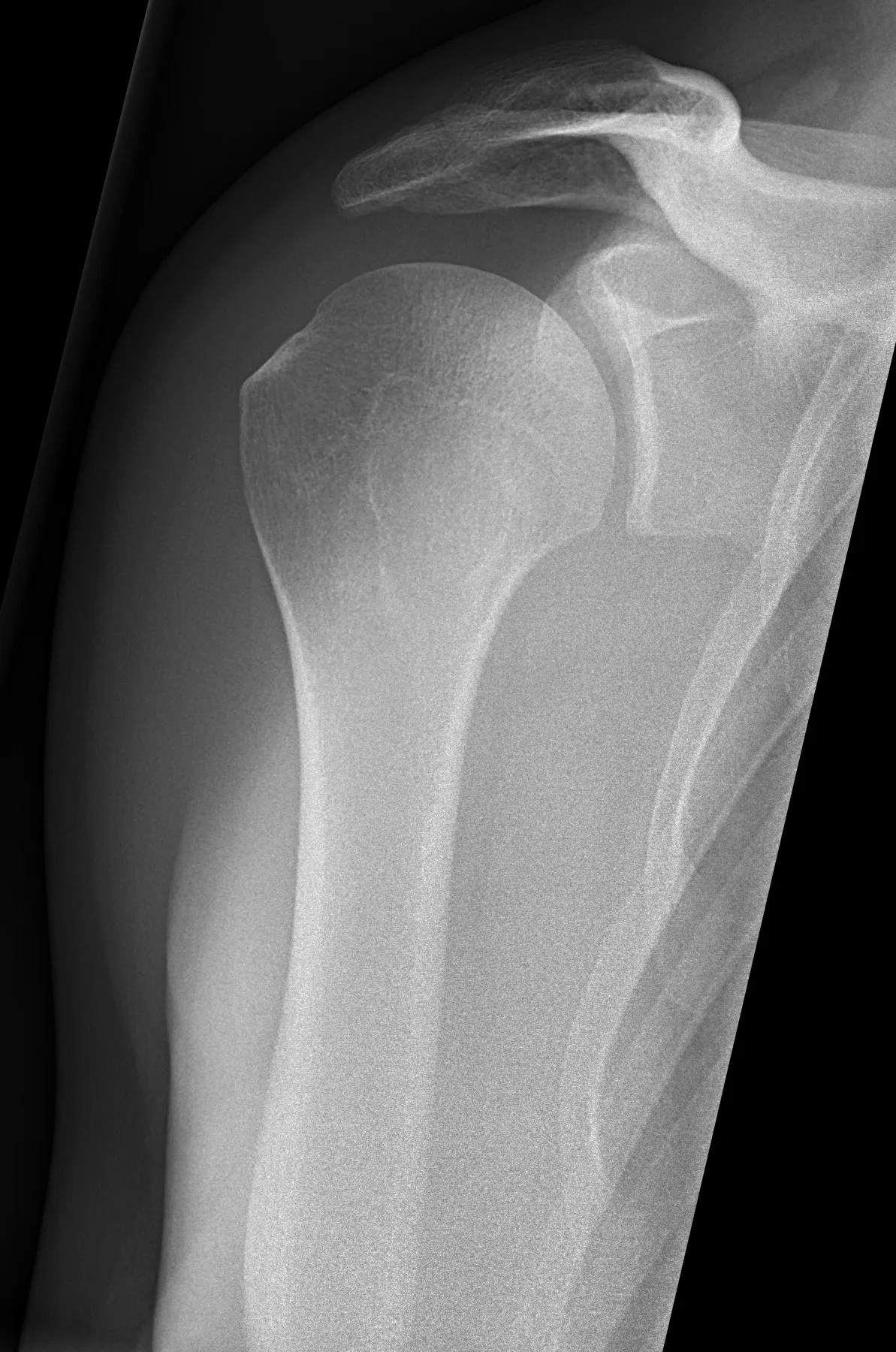
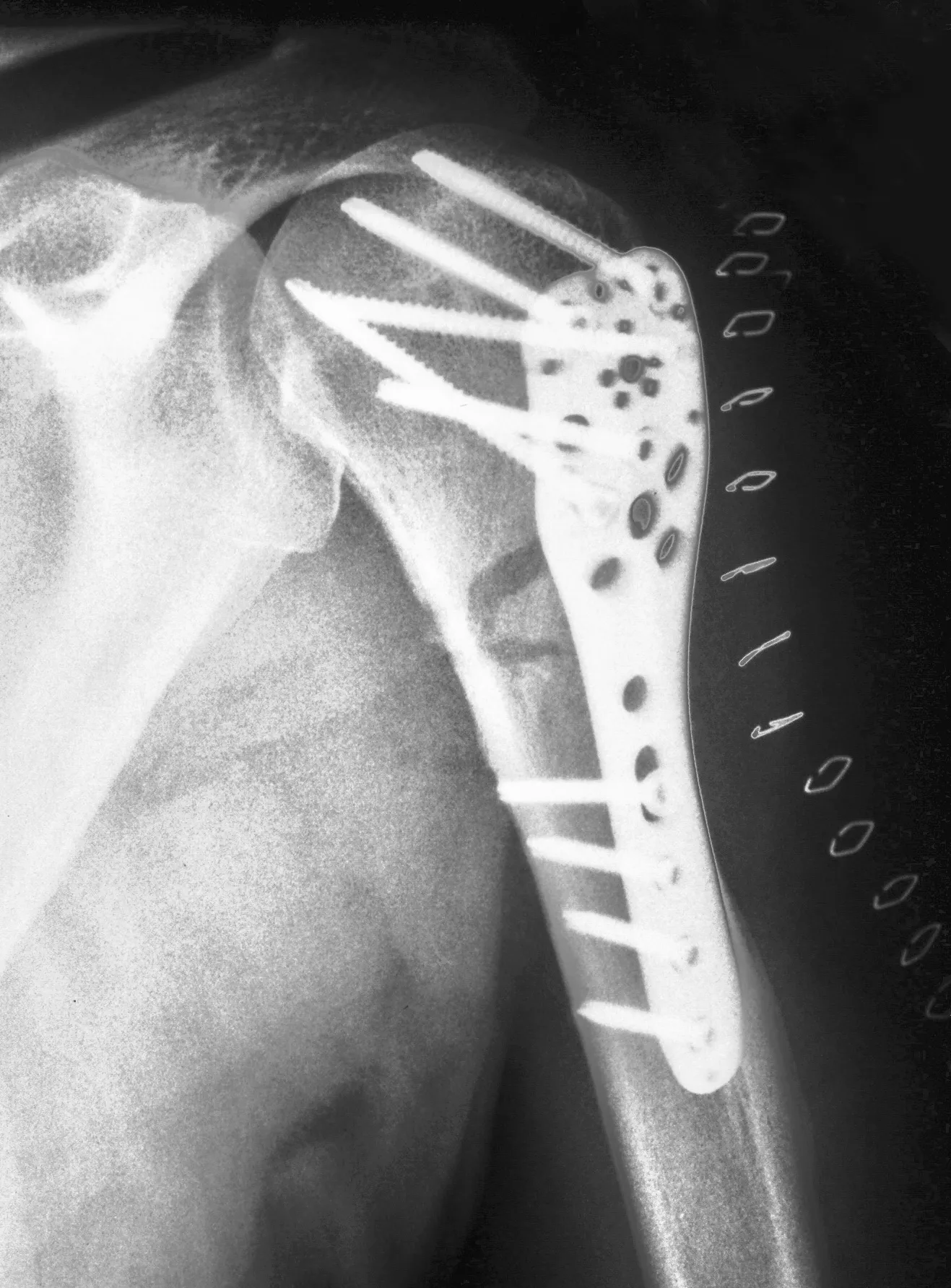
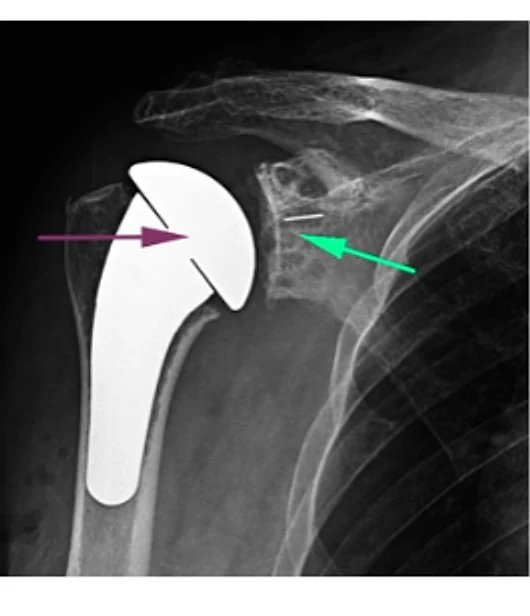
Shoulder replacement (shoulder arthroplasty) replaces a worn or damaged shoulder joint with biocompatible implants made of metal and high-strength polyethylene. It is indicated for shoulder arthritis, severe proximal humerus fractures, irreparable rotator cuff tears and joint loss following tumor surgery.
Implant Types
- Anatomic total shoulder replacement: The humeral head is replaced with a metal ball and the socket with a polyethylene component; requires an intact rotator cuff and provides the best function in primary arthritis
- Reverse shoulder replacement: The ball and socket are switched so the deltoid muscle powers the arm; preferred for irreparable cuff tears, cuff-tear arthropathy and complex fractures in elderly patients
- Partial (hemi) replacement: Only the humeral head is replaced, in selected cases with a healthy socket
Surgery and Recovery
Surgery takes 1.5–2 hours. A sling is worn for the first 3–6 weeks while passive motion begins early; active strengthening follows, with full motion typically restored within 3–6 months. Structured physiotherapy is the most important determinant of the outcome.
According to AAOS and SECEC data, shoulder arthroplasty achieves 85–95% long-term patient satisfaction with correct indication and appropriate rehabilitation.
Frequently Asked Questions
Who is a candidate for shoulder replacement?
Patients with advanced shoulder arthritis, severe proximal humerus fractures, irreparable rotator cuff tears with arthritis, or joint loss after tumors — who no longer respond to medication and physiotherapy.
What is the difference between anatomic and reverse shoulder replacement?
Anatomic replacement mimics the natural joint and requires an intact rotator cuff. In reverse replacement the ball and socket are switched, allowing the deltoid muscle to power the arm — preferred for cuff-deficient shoulders.
How long does the surgery take?
Typically 1.5–2 hours under general anesthesia; hospital stay is usually 1–3 days.
How long is recovery?
The arm is protected in a sling for 3–6 weeks with early passive motion; active use begins around week 3–6 and full range of motion returns within 3–6 months with physiotherapy.
How long does a shoulder implant last?
Modern implants function well for 15–20 years or longer; revision surgery is possible if needed.