
On this page· 6 sections
- 01Headings for Calcific Tendinitis Treatment in the Shoulder:
- 02The Difference Between Calcific Tendinitis and Other Shoulder Diseases
- 03Traditional and Conservative Treatment Methods
- 04What is Barbotage (Needle Treatment) and How Is It Performed?
- 05Recovery Process After Barbotage
- 06What is Shoulder Arthroscopy (Arthroscopic Debridement)?
Shoulder pain is a common complaint that negatively impacts daily life and reduces quality of life. While there are many different causes behind this pain, one of the most severe and stubborn conditions is known as calcific tendinitis. This disease, which arises from calcium deposits in the shoulder tendons, can lead to pain that becomes unbearable for patients. Fortunately, non-surgical and effective treatment options are available. In this article, we will discuss in detail what calcific tendinitis is, its causes, its symptoms, and particularly barbotage, a modern treatment method.
Headings for Calcific Tendinitis Treatment in the Shoulder:
What is Calcific Tendinitis?
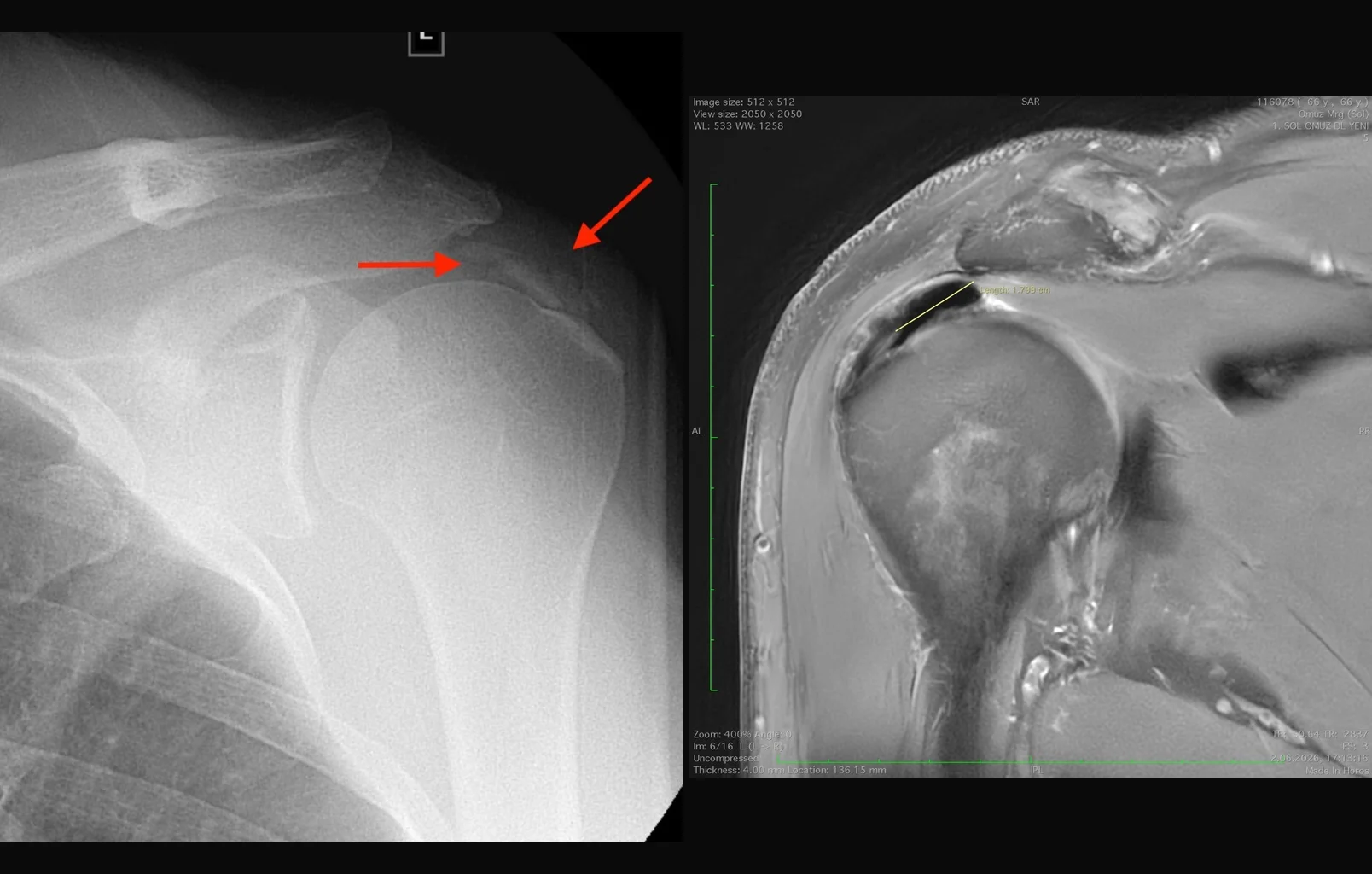
Calcific tendinitis is a disease characterized by the accumulation of calcium salts in the areas where the shoulder tendons attach to the bone. These salts, medically known as calcium hydroxyapatite, harden within the tendon tissue, causing pain and restricted movement. This condition is more frequently observed in individuals between the ages of 40 and 60, particularly in women. A significant portion of patients (34-45%) complain of severe pain.
The disease has a cyclical structure. Severe painful periods, moderately painful periods, and pain-free periods may follow one another. This cycle may cause patients to delay their decision to start treatment; however, it should not be forgotten that pain-free periods are not permanent and the disease can progress.

The most frequently affected tendon in the shoulder is the supraspinatus tendon, which is part of the muscle group known as the rotator cuff. Approximately 80% of calcifications are seen in this tendon. Since this tendon plays a critical role in lifting the arm, calcium deposits formed here can significantly restrict patients’ daily activities.
The Difference Between Calcific Tendinitis and Other Shoulder Diseases
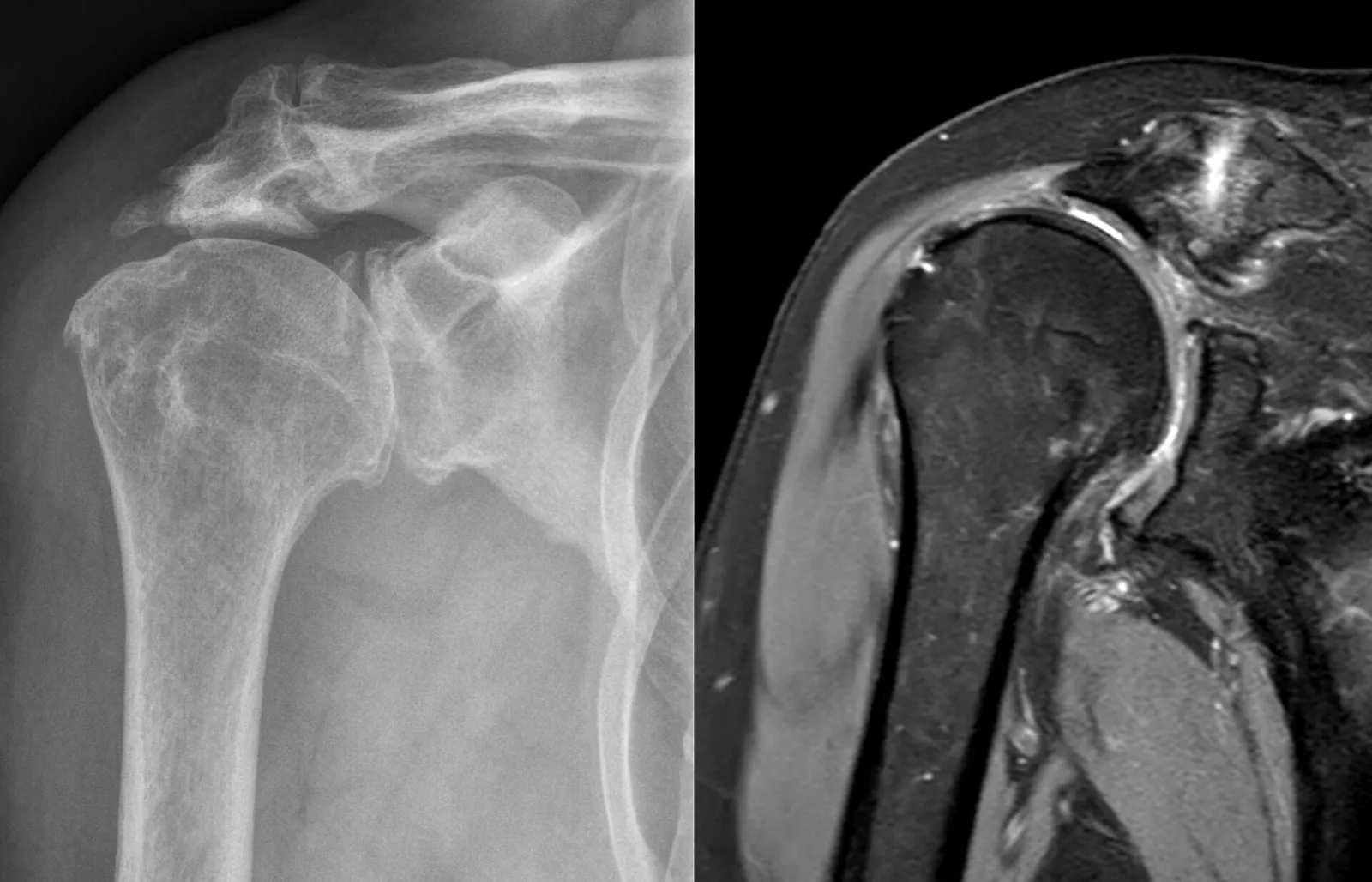
Calcific tendinitis is distinct from conditions it is often confused with, such as tendinitis (tendon inflammation) or bursitis (bursa inflammation). In classic tendinitis, the tendon becomes inflamed, but there is no calcium accumulation. Calcific tendinitis, on the other hand, involves both inflammation and calcium accumulation, making it a more complex and painful process. Imaging methods such as ultrasound or X-ray are essential for an accurate diagnosis.
What Causes Calcific Tendinitis?
A single, definitive cause for the development of calcific tendinitis has not yet been identified. However, there are two main theories in the scientific community that are most widely accepted and attempt to explain the development of the disease:
-
Degenerative Theory: According to this older theory, micro-damage and degeneration (wear and tear) occur in the tendon tissue due to aging and overuse of the shoulder. These damaged areas prepare the ground for calcium accumulation over time. Straining the shoulder with repetitive movements can accelerate this degenerative process.
-
Vascular Theory: According to this more modern approach, the primary cause is the decreased blood flow (hypovascularity) in the areas of the tendon close to the bone. Insufficient blood flow leads to oxygen deprivation and death of tendon cells. The body initiates a type of repair mechanism by depositing calcium salts in the areas where dead cells are located. However, this calcium accumulation causes pain and loss of function.
Although neither theory alone can fully explain calcific tendinitis, they combine the factors playing a role in the formation of the disease. Genetic predisposition, hormonal factors (particularly the relationship with estrogen levels in women), and systemic diseases such as diabetes and thyroid disorders are also considered risk factors.
What Are the Symptoms of Calcific Tendinitis?
Calcific tendinitis progresses with different symptoms depending on the stage of the disease. These stages generally describe a cyclical process lasting several years, and the pain and complaints felt change in each stage:
-
Pre-calcific Stage: In this stage, tendon cells (tenocytes) begin to structurally change and transform into cartilage-like cells (chondrocytes). There is no calcium accumulation yet. Patients may experience mild or moderate pain in this stage.
-
Calcific Stage: This stage is when calcium salts begin to accumulate within the tendon tissue. White areas with a chalky consistency are seen on X-ray or ultrasound. These accumulations lead to symptoms such as pain, sensitivity, and difficulty moving the arm in the shoulder. Pain may increase, especially at night.
-
Rest Stage: The calcification process stops in this stage. The patient’s pain decreases, and the shoulder becomes more comfortable. This period provides temporary relief for patients.
-
Resorptive Stage: This is usually the most painful stage of calcific tendinitis. The body’s defense cells (macrophages and granulocytes) begin to break down the calcium deposits. This breakdown process causes an intense inflammatory reaction. Calcium particles may leak outside the tendon, and symptoms similar to severe painful conditions such as bursitis (bursa inflammation) or frozen shoulder (capsulitis) may appear. In this stage, the pain can be so severe that patients have great difficulty moving their arm.
-
Post-calcific Stage: This stage begins after the calcium deposits are cleared, and the tendon tissue starts to heal. New blood vessels form, cells multiply, and the structure of the tendon is repaired with collagen production. When this process is complete, the patient regains their previous health.
This cyclical structure is of critical importance for understanding the natural course of the disease. In particular, the severe pain of the resorptive stage may drive patients to seek emergency medical help.
How Is Calcific Tendinitis Treated?
The aim of calcific tendinitis treatment is to reduce pain and restore the range of motion of the shoulder. The treatment plan is personalized according to the patient’s pain intensity and the stage of the disease.
Traditional and Conservative Treatment Methods
-
In mild cases: Pain control can be achieved with painkillers (multimodal analgesia). This means using painkillers with different mechanisms of action in combination.
-
In moderate and high-intensity pain:
-
Shoulder rest and immobilization: Resting the shoulder for a short time during severe painful periods may be beneficial.
-
Physiotherapy: Methods applied by physiotherapists, such as iontophoresis, ultrasound, and cold/heat applications, may help alleviate pain and improve shoulder movements.
-
Corticosteroid Injections: Single-dose corticosteroid injections into or around the shoulder joint can temporarily reduce severe inflammation and pain. However, since this method does not clear calcium deposits, it does not offer a permanent solution.
-
ESWT (Shock Wave Therapy): In this method, used in some clinics, high-energy sound waves are focused on the calcified area. It is thought that these waves break down calcium deposits and trigger tissue healing. However, some sources indicate that ESWT is not preferred due to its painful nature and controversial efficacy.
These conservative methods may be effective, especially in the early stages of the disease or in mild cases. However, more invasive methods may be required for more stubborn and severe calcifications.
A Non-Surgical and Effective Method: Barbotage
Today, one of the most effective methods offering a non-surgical and permanent solution in the treatment of calcific tendinitis is Barbotage. Also known as Calcific Tendinitis Needle Treatment, this method aims to solve the disease at its root, unlike traditional corticosteroid injections.

What is Barbotage (Needle Treatment) and How Is It Performed?
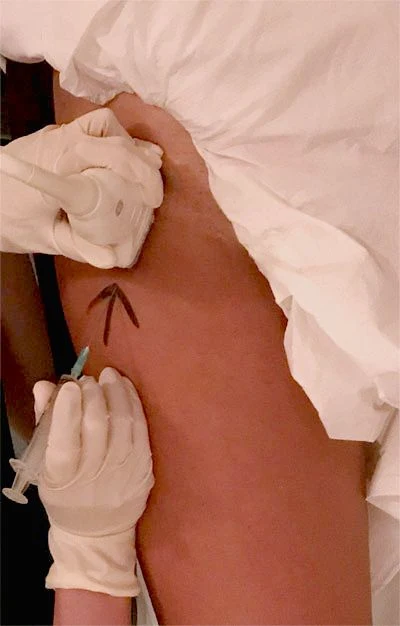
The barbotage procedure is usually performed by an orthopedic or physical therapy specialist in a clinic or outpatient setting. The procedure is performed under ultrasound guidance, which allows the treating physician to clearly see the exact location and size of the calcification. The steps of the procedure are as follows:
-
Imaging and Localization: While the patient lies in the appropriate position, the shoulder area is examined with an ultrasound device. The location, size, and depth of the calcified deposits are determined. This is a critical step for the procedure to be performed precisely and safely.
-
Local Anesthesia: Local anesthesia is applied to the skin around the shoulder and the area where the tendon is located to ensure the patient does not feel pain during the procedure. This makes the procedure almost completely painless.
-
Needle Entry and Washing: Under ultrasound guidance, a special needle or two needles are used to reach the calcified area. While a sterile fluid (usually physiological saline) is injected into the area with the first needle, the broken calcium deposits are drawn out with the other needle. This procedure can be described as “washing” the deposits. Since the consistency of the calcium is usually like “toothpaste,” this cleaning process is quite effective.
-
Tendon Stimulation: The fluid injected around the tendon and the needle stimulation during the washing process increase the activity of defense cells such as macrophages and granulocytes in that area. This accelerates the body’s self-repair process and encourages the dissolution of remaining calcium particles.
-
Post-Procedure Injection (Optional): Sometimes, a low-dose corticosteroid injection may be given to control the inflammatory reaction that occurs after the procedure. However, this is different from Barbotage itself, and its main purpose is not to clean the calcium but to reduce potential pain that may occur afterwards.
Advantages of Barbotage
Barbotage has many advantages in the treatment of calcific tendinitis:
-
It is a non-surgical solution: It does not require large surgical incisions, general anesthesia, or long hospital stays.
-
It offers a permanent solution: Instead of just temporarily relieving pain, it aims to eliminate the calcium deposits, which are the root cause of the disease.
-
It has a high success rate: Since it is performed under ultrasound guidance, almost all of the calcium deposits can be cleared. The success rate is around 80-90%.
-
Fast recovery: Patients can return to their normal daily lives within a few days after the procedure. It is possible to return to non-weight-bearing office jobs the next day.
-
Low risk profile: The risk of infection, bleeding, or anesthesia-related complications is much lower compared to surgery.
-
Repeatability: If necessary, multiple sessions can be applied for larger and more stubborn calcifications.
Recovery Process After Barbotage
After the barbotage procedure, it is recommended that the patient rest their shoulder for a few days and avoid heavy physical activities that require loading. Mild pain and sensitivity are considered normal during this process and can usually be controlled with painkillers. Complete healing of the tendon and full return of function may take a few weeks. Starting physiotherapy may be beneficial to support the recovery process.
Surgical Options for Calcific Tendinitis
In cases where barbotage and other conservative methods are insufficient, or depending on the patient’s specific conditions, surgical intervention may become an option. The most commonly used surgical method is Shoulder Arthroscopy.

What is Shoulder Arthroscopy (Arthroscopic Debridement)?
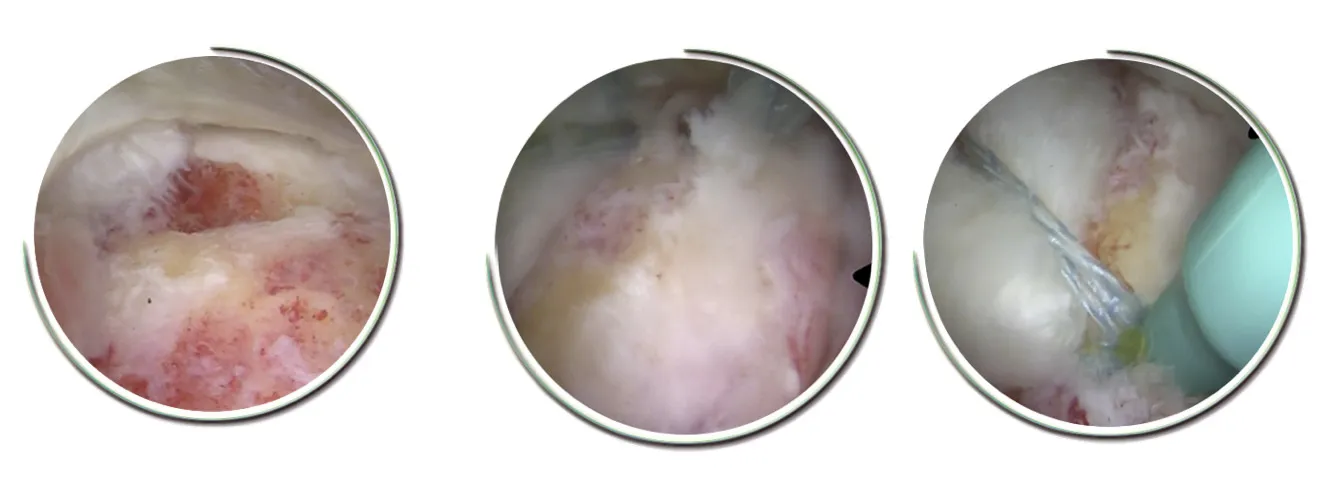
Arthroscopic debridement is a minimally invasive surgical procedure performed in an operating room under general anesthesia.
-
Procedure: A camera (arthroscope) is inserted through 2-3 small incisions (holes) made in the shoulder. Thanks to this camera, the surgeon can clearly see the inside of the shoulder joint and tendons on a screen. Then, the calcium deposits are cleaned with special surgical instruments inserted through the other incisions.
-
When is it preferred? Surgery is generally recommended in the following situations:
-
If there is a tendon tear accompanying the calcification,
-
If the calcium accumulation is very dense and widespread,
-
If sufficient results cannot be obtained with non-surgical methods such as barbotage.
-
Recovery process: The patient may need to use a sling for 1-3 weeks after surgery. If a tendon tear was also repaired during the surgery, this period may extend to 3-6 weeks. A physical therapy and rehabilitation program is mandatory to speed up the post-surgical recovery process.
Calcific tendinitis is a stubborn disease that causes severe pain and restricted movement in the shoulder. However, effective and permanent solutions for this condition are available. While rest and physiotherapy may be sufficient in mild cases, the Barbotage method stands out in cases of severe pain and dense calcification.
Barbotage is a non-surgical, safe treatment method with a high success rate. This method, which allows calcium deposits to be washed and cleaned under ultrasound guidance, helps patients get rid of their pain and return to their normal lives. If you have been suffering from shoulder pain for a long time, you can consult an orthopedic or physical therapy specialist and consider the option of cleaning the calcification in your shoulder with the Barbotage method. This may be one of the most important steps you can take to get rid of pain and regain your shoulder health.