

On this page· 2 sections
Joint and tendon disease intra‑articular injection therapies are an important option between oral medication and surgery. The goal is to control pain and inflammation and to support the biological healing capacity of cartilage and tendons.
Main Injection Methods Used
- Corticosteroid injections: Powerful anti‑inflammatory effect; provides rapid relief in acute pain and inflammatory periods
- Hyaluronic acid (viscosupplementation): Supports the lubricity and cushioning properties of joint fluid; used in early‑to‑mid stage osteoarthritis
- PRP (Platelet‑Rich Plasma): Stimulates tissue healing with growth factors prepared from the patient’s own blood
- Smart plasma (ACRS — Autologous Cytokine‑Rich Serum): Autologous serum enriched with anti‑inflammatory cytokines (especially IL‑1Ra)
- A2M (Alpha‑2‑Macroglobulin): Biological agent that suppresses enzymes responsible for cartilage degradation
- Stem cell and biologic solutions: Regenerative approaches
Indications
- Early‑to‑mid stage osteoarthritis of the knee, hip, and shoulder
- Tendinopathies and peritendinous problems (including calcific tendinitis before/after barbotage)
- Healing support in sports injuries
- Symptom control before surgery or patients seeking alternatives to surgery
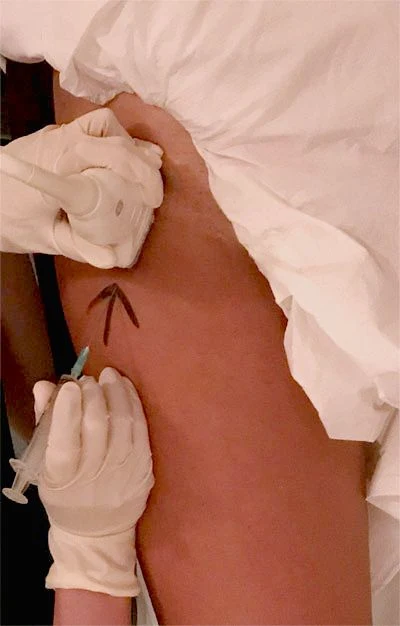
Injection selection is personalized based on disease stage, patient age, activity expectations, and imaging findings. All procedures are performed under sterile conditions, with ultrasound guidance when needed.
The treatment topics in this section are listed below.
Injection Treatments
Topics in this section

Frequently Asked Questions
Are injection treatments painful?
The skin and joint entry path are anesthetized with local anesthesia before the procedure; most patients tolerate the procedure comfortably. Mild tenderness for 1-2 days afterward is normal.
How many times can a corticosteroid (cortisone) injection be performed?
Usually more than 3-4 injections in the same joint per year is not recommended; repeated corticosteroid around the tendon can lead to tendon weakening.
What is the difference between hyaluronic acid and corticosteroid?
Corticosteroid rapidly reduces pain with strong anti-inflammatory effect; hyaluronic acid increases joint lubrication, its effect starts more slowly but may last longer.
When are PRP, smart plasma and A2M preferred?
They are chosen to support intra-articular healing in early to mid-stage osteoarthritis and tendon injuries; the method is determined by the patient's age, type of damage, and stage.
When does the effect of the injection become apparent?
Corticosteroid within 24-72 hours, hyaluronic acid in 2-4 weeks, PRP and biological injections typically show effect within 2-6 weeks.