
On this page· 10 sections
- 01Symptoms and Diagnosis
- 021. Conservative (Non-Surgical) Treatment
- 03Applications:
- 042. Injection Treatments
- 05Corticosteroid Injection
- 06PRP- SANAKIN (Platelet-Rich Plasma) Application
- 07A2M (Alpha-2 Macroglobulin)
- 083. Surgical Treatment (Arthroscopic Distal Clavicle Resection)
- 09Surgical principle:
- 10Conclusion and Recommendations
Located at the top of the shoulder, the acromioclavicular joint (AC joint) is a small but very important joint where the collarbone (clavicle) meets the acromion, a projection of the shoulder blade (scapula). This joint enables load transfer during overhead lifting, cross-body movements, and overhead activities.
The AC joint is kept stable by the joint capsule, acromioclavicular ligaments, and coracoclavicular ligaments. However, over time, wear and tear can occur in these structures. Especially overhead sports (tennis, weightlifting, swimming, volleyball) or repetitive heavy loading can lead to the development of degeneration (osteoarthritis) or osteolysis (bone resorption) on the joint surfaces.
Symptoms and Diagnosis
Patients with acromioclavicular joint degeneration typically present with the following complaints:
- Localized pain and tenderness in the upper part of the shoulder,
- Severe pain when putting on overhead clothing, reaching across the body, or lifting the arm overhead,
- Swelling and a clicking or popping sound during movement,
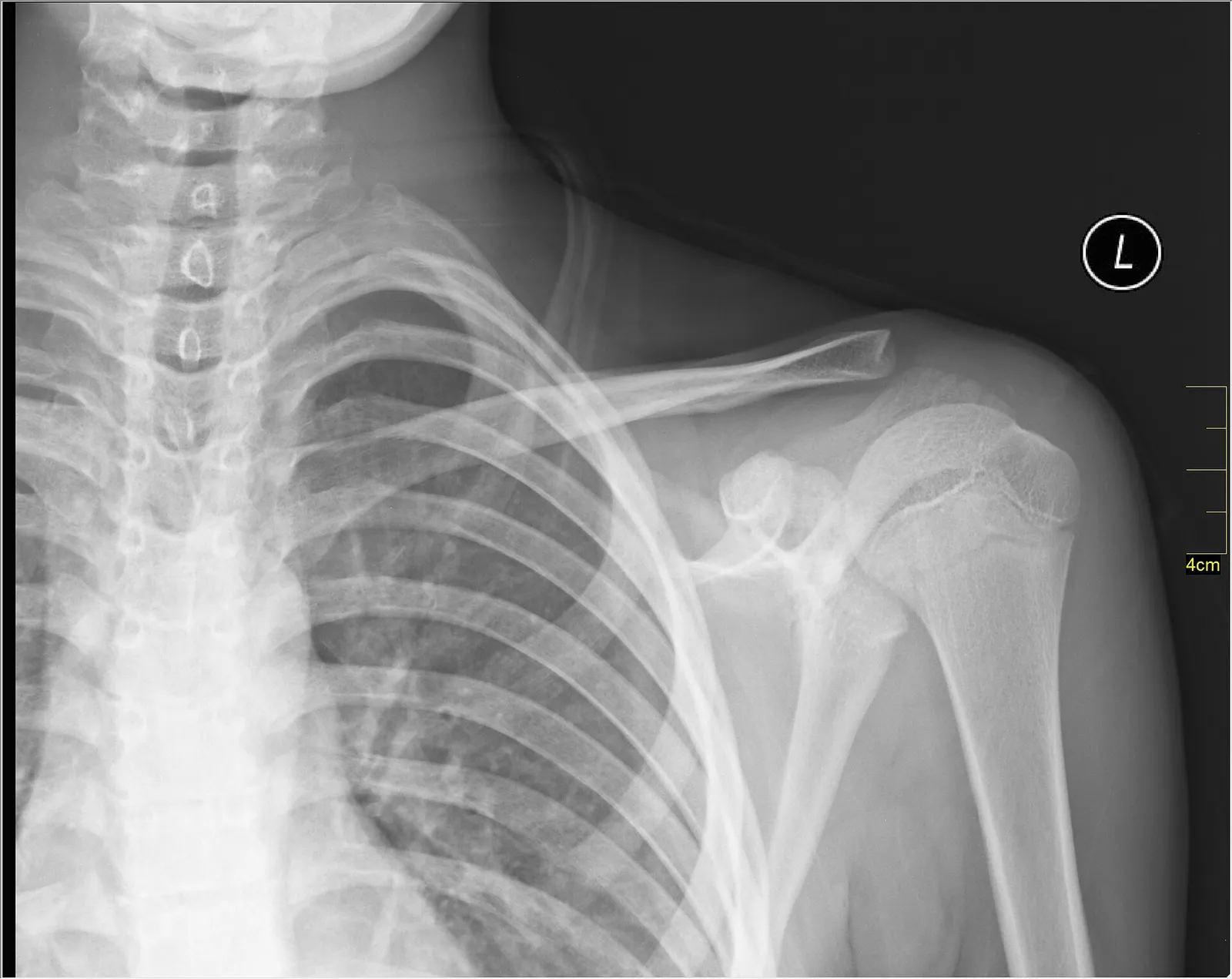
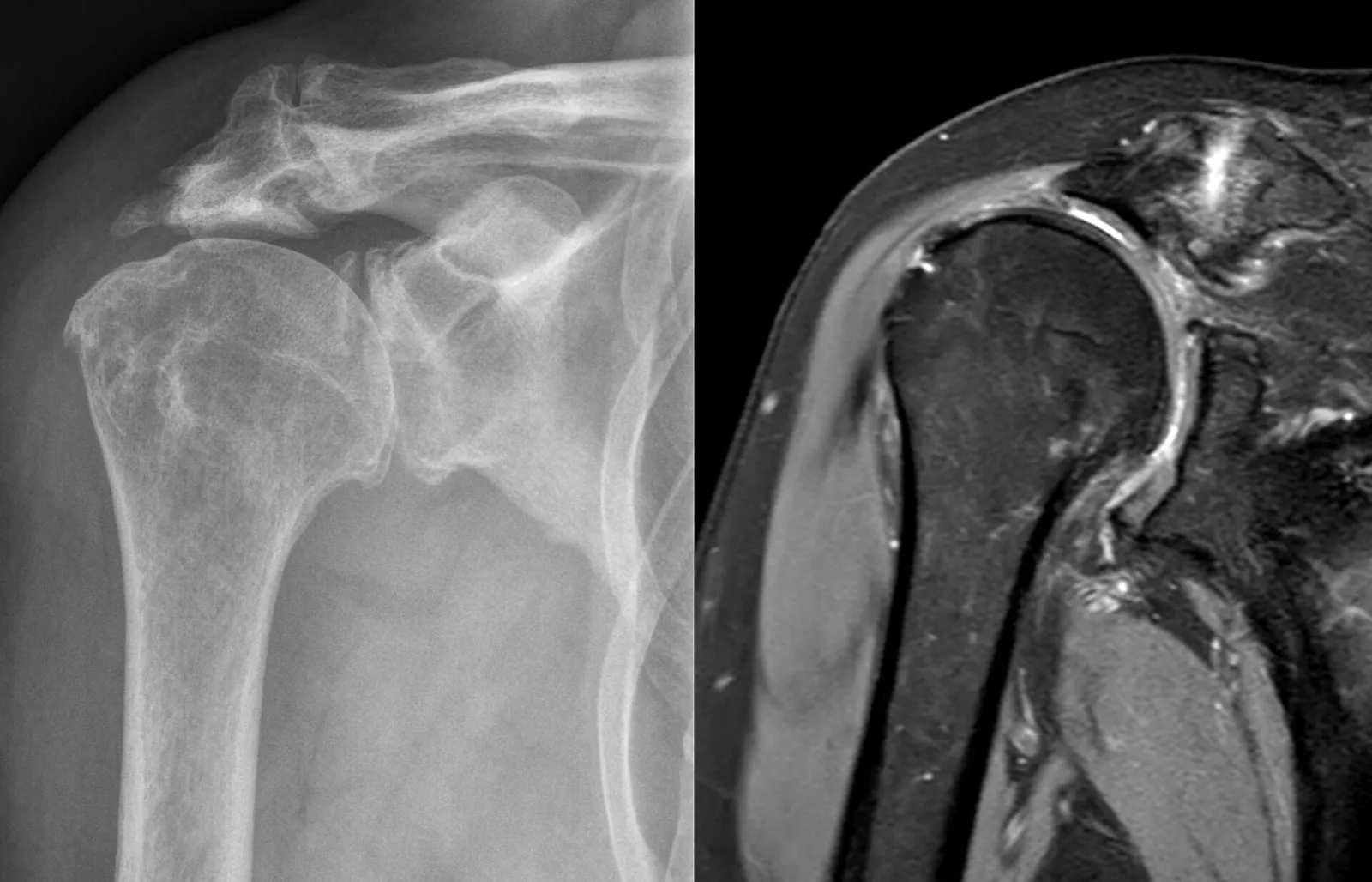
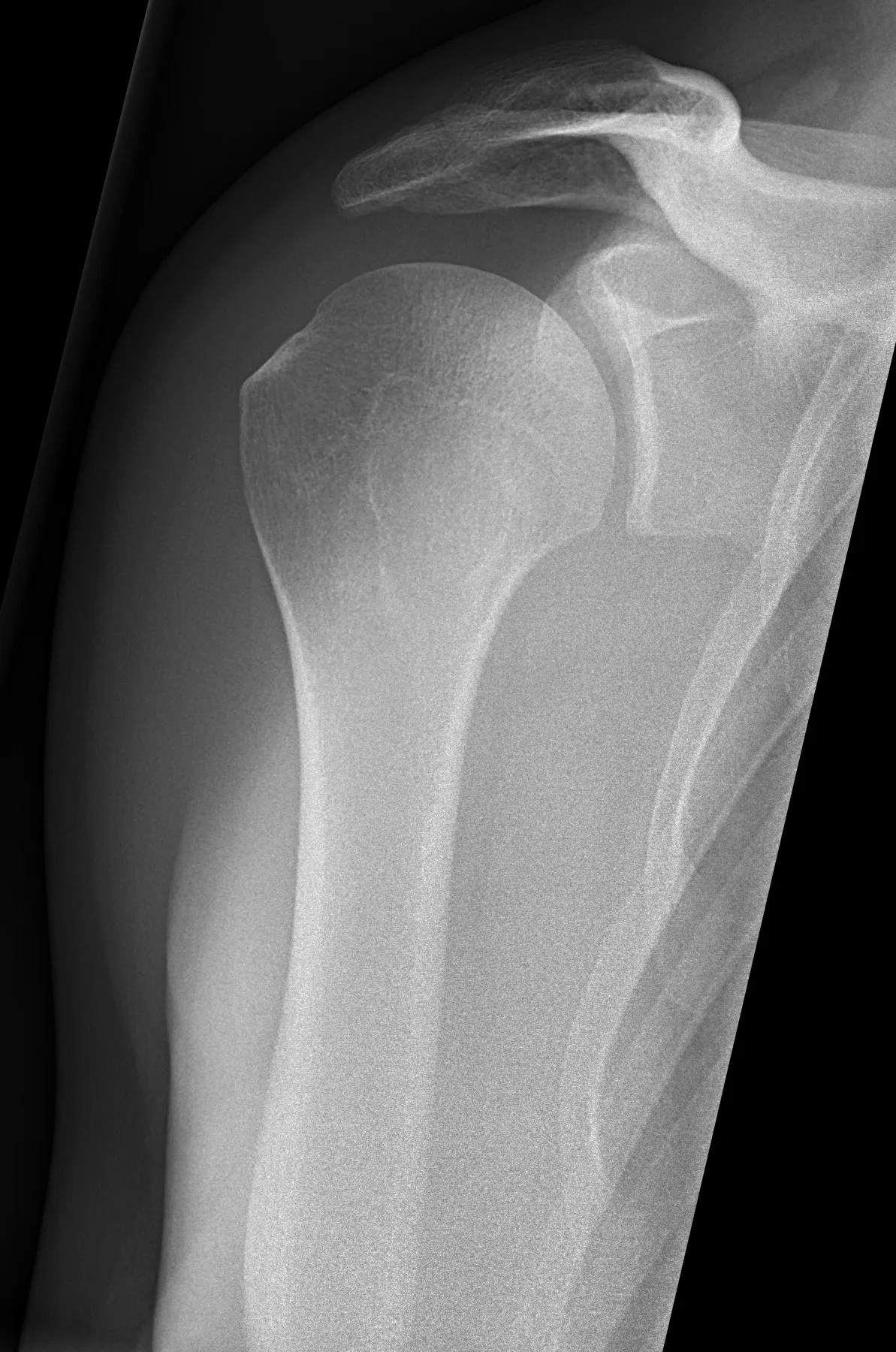
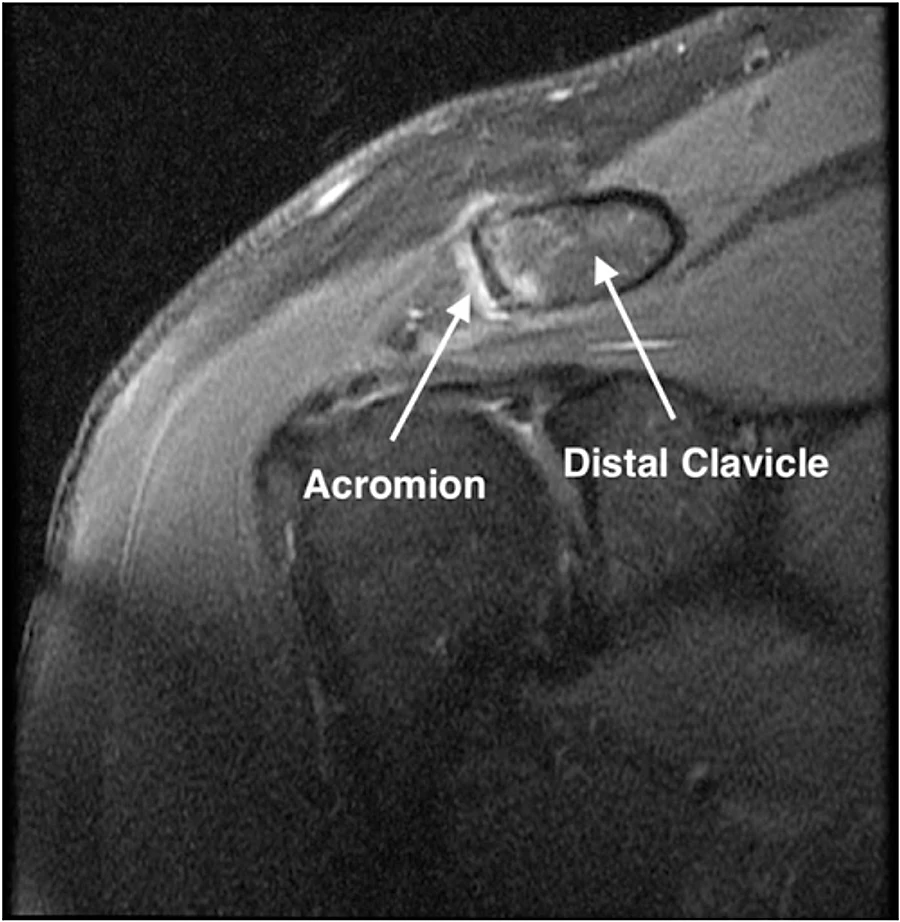
- Pain radiating to the neck or deltoid muscle. Diagnosis is made through clinical examination, direct shoulder X-rays, and sometimes MRI imaging. MRI may reveal narrowing of the joint space, irregularities on the bone surfaces, and accompanying inflammation in subacromial bursitis. AC joint degeneration is one of the most common shoulder pathologies in individuals over 40 years of age (Murrell et al., J Shoulder Elbow Surg, 2003).
1. Conservative (Non-Surgical) Treatment
The first step in treatment is to reduce pain and alleviate the load on the joint. Successful results can be achieved in mild to moderate symptoms without the need for surgery.
Applications:
- Activity modification: Overhead movements and heavy lifting that exacerbate pain are avoided.
- Rest and ice application: Reduces inflammation in the joint, especially during acute pain episodes.
- Medication: Nonsteroidal anti-inflammatory drugs (NSAIDs) are effective in reducing pain and edema.
- Physical therapy and rehabilitation:
- Exercises aimed at correcting scapulothoracic rhythm,
- Strengthening exercises for the deltoid and rotator cuff muscles,
- Posture education and shoulder girdle stretching exercises.
Physical therapy is recommended as the first step in reducing AC joint-related pain (Vinod et al., Orthop Clin North Am, 2020).
2. Injection Treatments
In cases where pain and inflammation persist, injection therapies can be an effective option.
Corticosteroid Injection
- Injection into the AC joint space or subacromial region can rapidly reduce pain.
- Ultrasound-guided applications increase anatomical accuracy and efficacy. Coombes et al., Lancet, 2010: Cortisone injections have been shown to be effective in short-term pain control.
PRP- SANAKIN (Platelet-Rich Plasma) Application
- Plasma derived from the body’s blood is thought to support tissue repair with growth factors.
- It may support the regeneration of joint cartilage, especially in chronic cases. Filardo et al., Am J Sports Med, 2019: Positive short-term effects of PRP in pain control for AC joint osteoarthritis have been reported.
A2M (Alpha-2 Macroglobulin)
- It can slow down cartilage degradation by blocking proteolytic enzymes.
- Although still at an experimental stage, it is a promising option among biological treatments.
3. Surgical Treatment (Arthroscopic Distal Clavicle Resection)
In patients where pain persists despite conservative treatment and functional loss is significant, surgical options come into play. Currently, arthroscopic distal clavicle resection (Mumford procedure) is the most frequently applied surgical method.
Surgical principle:
- To eliminate contact between the joint surfaces by removing 5–8 mm of bone from the outer (distal) end of the clavicle.
- This eliminates mechanical friction causing pain and provides comfort of movement.
- The procedure performed arthroscopically is minimally invasive; subacromial bursitis or accompanying rotator cuff pathologies can also be treated in the same session. Flatow et al. (J Shoulder Elbow Surg, 2007) reported that the arthroscopic Mumford procedure provides high patient satisfaction in pain control and functional improvement.
Conclusion and Recommendations
Acromioclavicular joint degeneration is a disease that usually progresses slowly and can be controlled with conservative methods in its early stages. However, for long-standing pain that restricts daily activities, injection treatments or arthroscopic surgery may be necessary.
With appropriate treatment, patients:
- Regain pain-free shoulder movements,
- Return to their daily activities,
- Can confidently continue their sports and work life. Early diagnosis, a correct treatment plan, and regular rehabilitation are the most important factors for long-term success.