
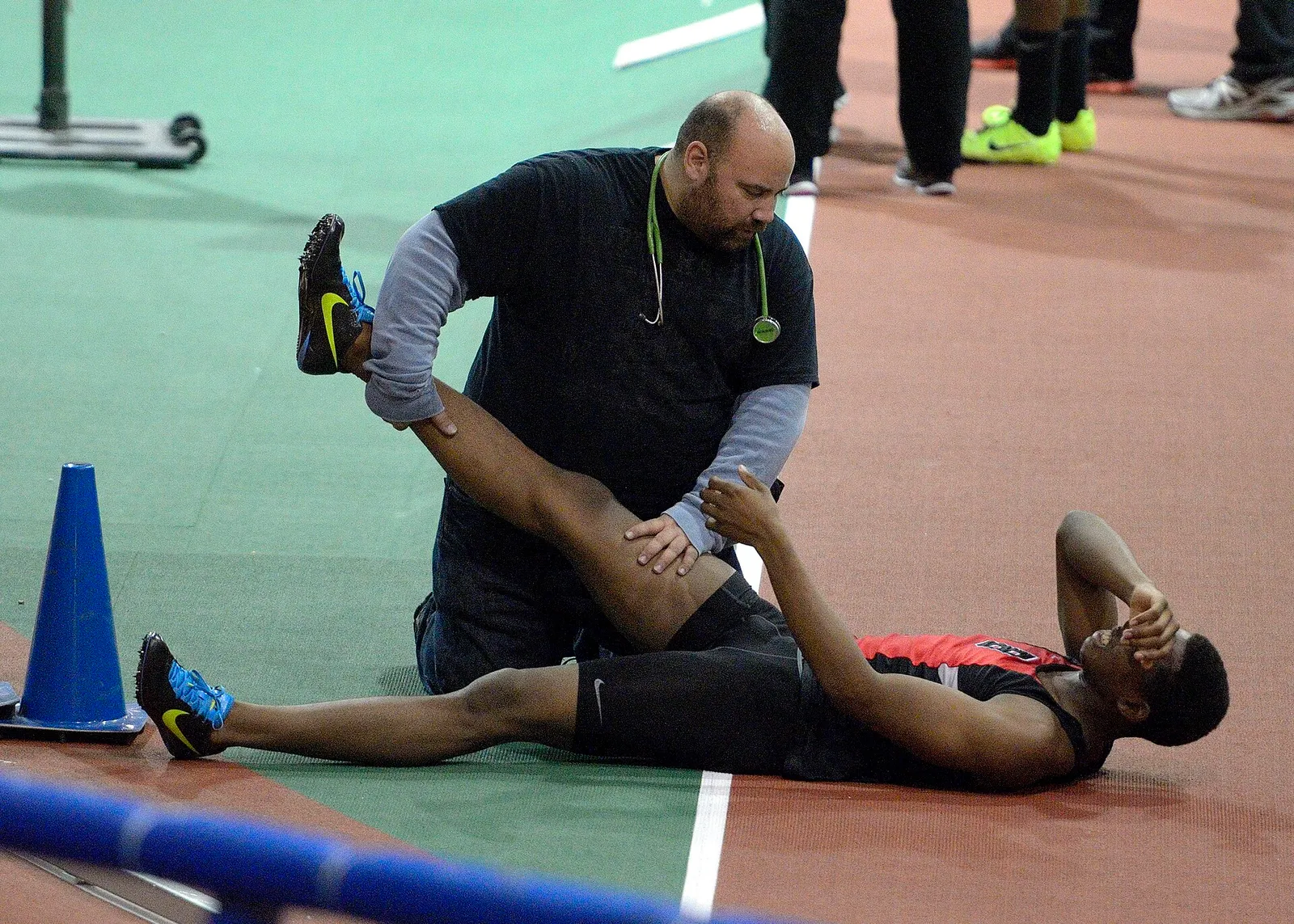
What is a sports injury? Injuries that occur during amateur or professional sporting activities, caused by sudden or repetitive stresses, are considered sports injuries.
What is a sports injury?
We consider injuries that occur during amateur or professional sporting activities, caused by sudden or repetitive stresses, as sports injuries.

What are the causes of sports injuries?
It is very interesting that 62% of professional sports injuries in childhood occur during training. One third of parents do not show the same sensitivity to precautions and preparation taken during matches for training. It has been found that 50% of these injuries are preventable.
A study in the 13‑year‑old group shows that 70% of children who reach this age quit sports. There are three main reasons: coaches, families, and the competitive mindset of the adult world. Competition brings excessive training and increased injury risk. We see that contact team sports, where one‑on‑one competition is high, are especially effective in this situation.
Where and in which sports do injuries most often occur?
Each sport has its own types of injuries and injury locations. In football injuries, we frequently see tears of the thigh and leg muscle groups and knee ligament injuries.
In sports such as basketball and volleyball, which require sudden effort, jumping, and repetitive stress on the shoulder and arm, not only thigh and leg problems appear but also shoulder and elbow issues begin to manifest.
In sports like tennis and swimming, partial tears of the shoulder ligaments, capsule, and tendons become evident.
In our country, football ranks first among amateur or hobby sports. Especially the weekly hobby of indoor (futsal) football for the young and middle‑aged groups is very important. We try to play a sport with limited cardiac reserve, lacking flexibility, and involving high‑level contact on the field once a week with full effort. Injuries become inevitable.
What are the most common problems in sports injuries? Why?
The most common problems involve muscle strains and tears. In particular, strains and tears of the thigh and leg muscle groups are a recurring issue for elite and amateur athletes, and can arise due to a lack of stretching and strengthening exercises appropriate for the sport.
Injuries to the ligaments and tendons around joints are less common but require more specialized treatment. In particular, knee ligament injuries, shoulder tendon tears, and dislocation problems may require surgical treatment.
Fortunately, fractures are less common. A significant portion of fractures may require surgical treatment depending on the severity of the injury.

What approach is taken in treating these problems?
Injuries involving acute muscle tears or sprains are mostly treated without surgical intervention. Approaches such as applying ice compression at the time of injury and resting the injured area facilitate the rest of the treatment and also affect its duration.
For joint‑related tears, sprains, and suspected fractures, an expert opinion must be obtained immediately.
When does surgical intervention come into play?
Acute joint sprains, tendon and ligament tears, or fractures may require surgical treatment depending on the severity of the injury and the extent of the damaged structures. In displaced, highly mobile fractures, surgery is needed to eliminate movement of the fracture and achieve union. When the main ligament groups that provide joint stability are damaged (such as cruciate ligament injuries, labral tears of the shoulder and hip), open or arthroscopic repairs and reconstructions can be performed to restore joint balance.
Finally, we may need a surgical approach to treat degenerative changes around the joint caused by repeated minor injuries. This group, which often lacks a clear injury history, is usually at the point of giving up their beloved sport, and the benefit they receive from rehabilitation is insufficient to continue.
What are the methods in surgical intervention?
The biggest concern of professional athletes is to continue their career and return to the field as soon as possible. For amateurs or hobby athletes, the goal is to return to daily life and work as quickly and efficiently as possible. It is clear that no one wants to compromise time or lifestyle. The surgical techniques and therapies we use have begun to shape around these goals. We use as few incisions as possible (minimally invasive) or closed (arthroscopic) methods. We have started performing surgeries that are less distressing to the patient, shorten hospital stays, and are robust enough to allow rapid rehabilitation.
Thanks to arthroscopic shoulder and hip surgeries, we can now reach deeper joint areas in a closed manner. The biological products we apply during surgery have reduced patients’ pain levels and made them more engaged in rehabilitation. Arthroscopic knee surgery has become the area that benefits most from surgical techniques and biological products, especially for ligament and cartilage problems.